Ten minutes that no one will ever repeat
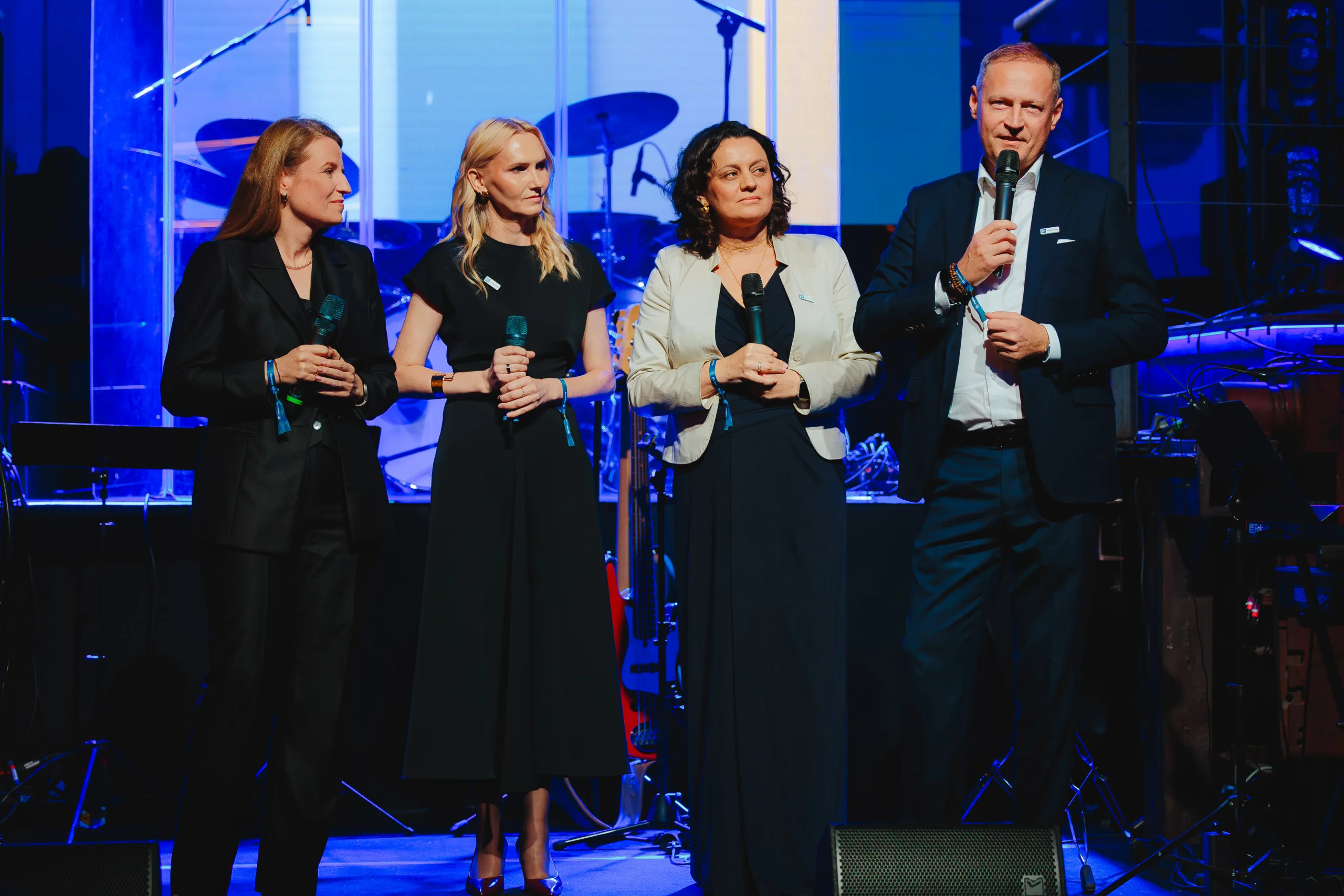
At 19:30, the mFaktoring board took to the stage at MOXO. In the brief I'd received a few days earlier, 15 minutes had been allocated for the welcome and speeches. A schedule is there to be followed, but an event is a living organism, not a spreadsheet: one speech will be shorter, another longer. This time, the whole thing wrapped up in 10 minutes.
The first speaker took significantly less time than I'd anticipated, so I immediately picked up the pace. The client commissions good photos from the official part of the event and judges the whole job on that basis. Sometimes we agree in advance where I should position myself, but the order of events, movement and decisions made on the spot are left to me, because I know what I'm doing and that's why I was hired.
The whole evening went like this:
18:00-19:00
What happened and what came of it
The venue was ready, but the guests hadn't arrived yet. Branding, table arrangements, the stage before the event began
19:00-19:30
What happened and what came of it
Guests arrive, greetings and initial conversations
19:30-19:40
What happened and what came of it
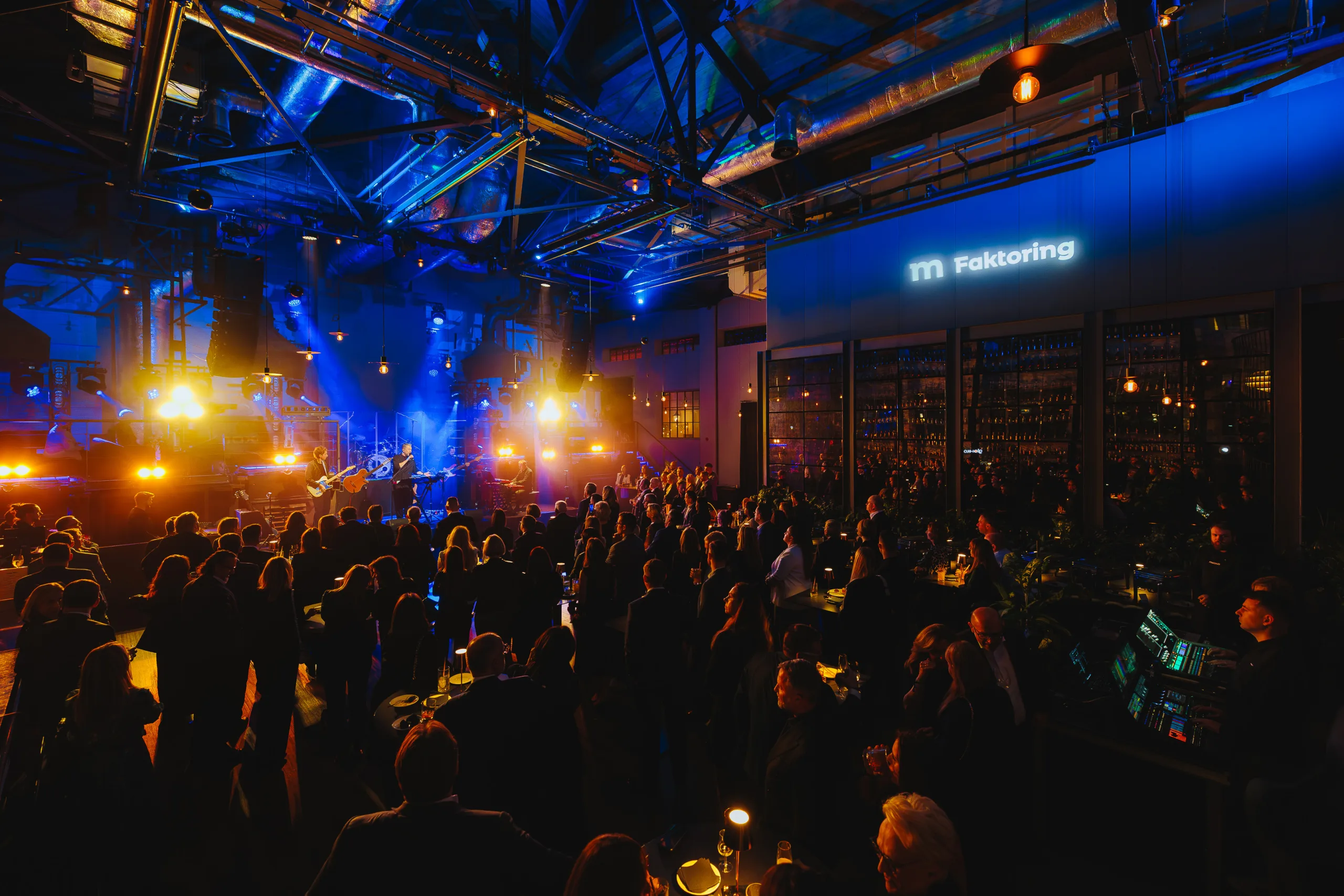
Welcome and speech by the board. 6 locations, around 30 photos per location
19:40-21:30
What happened and what came of it
Dinner and networking, photo coverage at the tables
21:30-22:30
What happened and what came of it
Concert, artists and stage size
22:30-00:00
What happened and what came of it
The rest of the evening, the excitement and supplementary shots
| Time | What happened and what came of it |
|---|---|
| 18:00-19:00 | The venue was ready, but the guests hadn't arrived yet. Branding, table arrangements, the stage before the event began |
| 19:00-19:30 | Guests arrive, greetings and initial conversations |
| 19:30-19:40 | Welcome and speech by the board. 6 locations, around 30 photos per location |
| 19:40-21:30 | Dinner and networking, photo coverage at the tables |
| 21:30-22:30 | Concert, artists and stage size |
| 22:30-00:00 | The rest of the evening, the excitement and supplementary shots |
What I know about a venue before I set foot in it for the first time
I ask about three specific things: the scale of the event, where it's taking place and what sort of event it is. Then I scout the location, which means I look it up online and view photos of the interior or the surrounding area so I know what to expect before I go there.
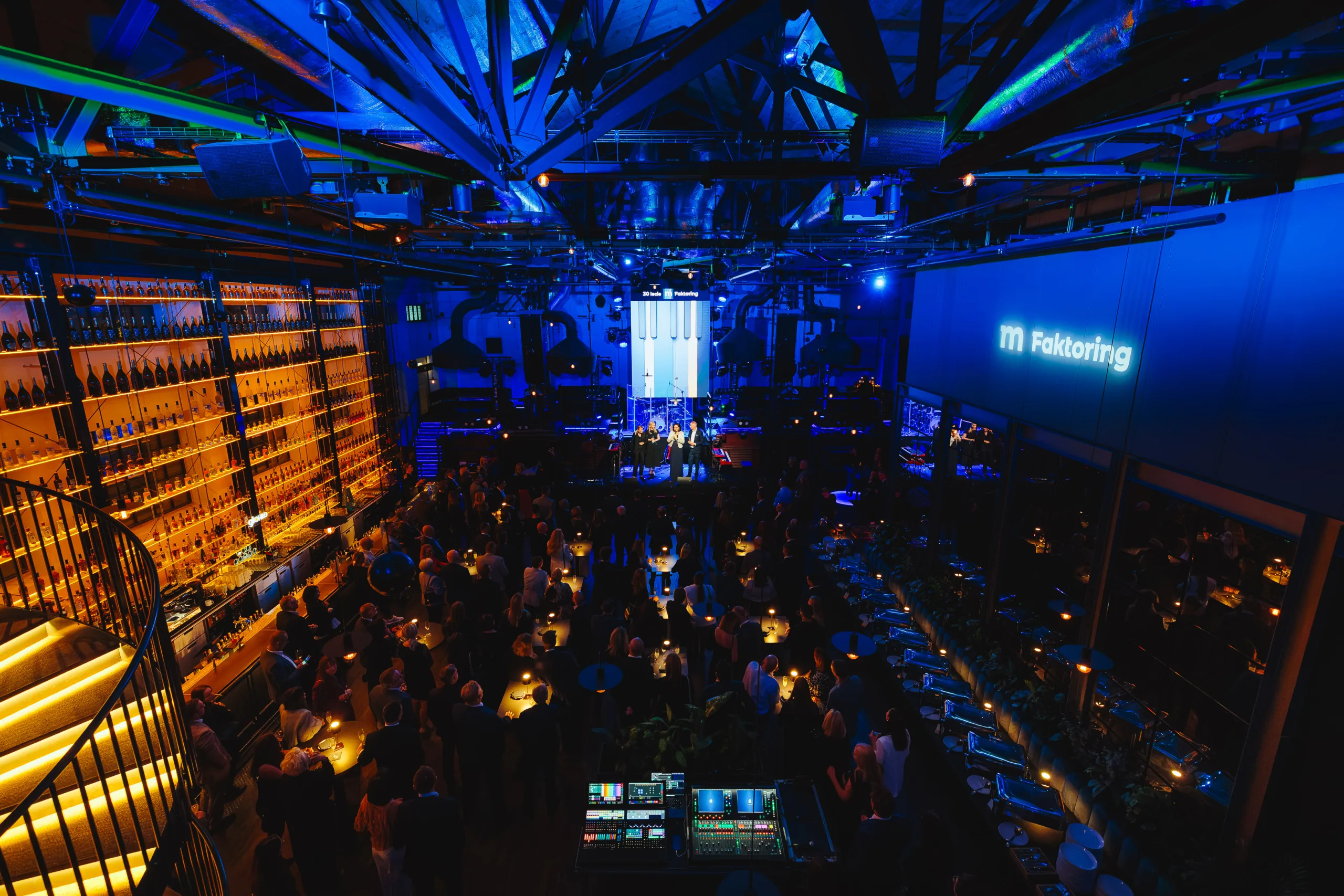
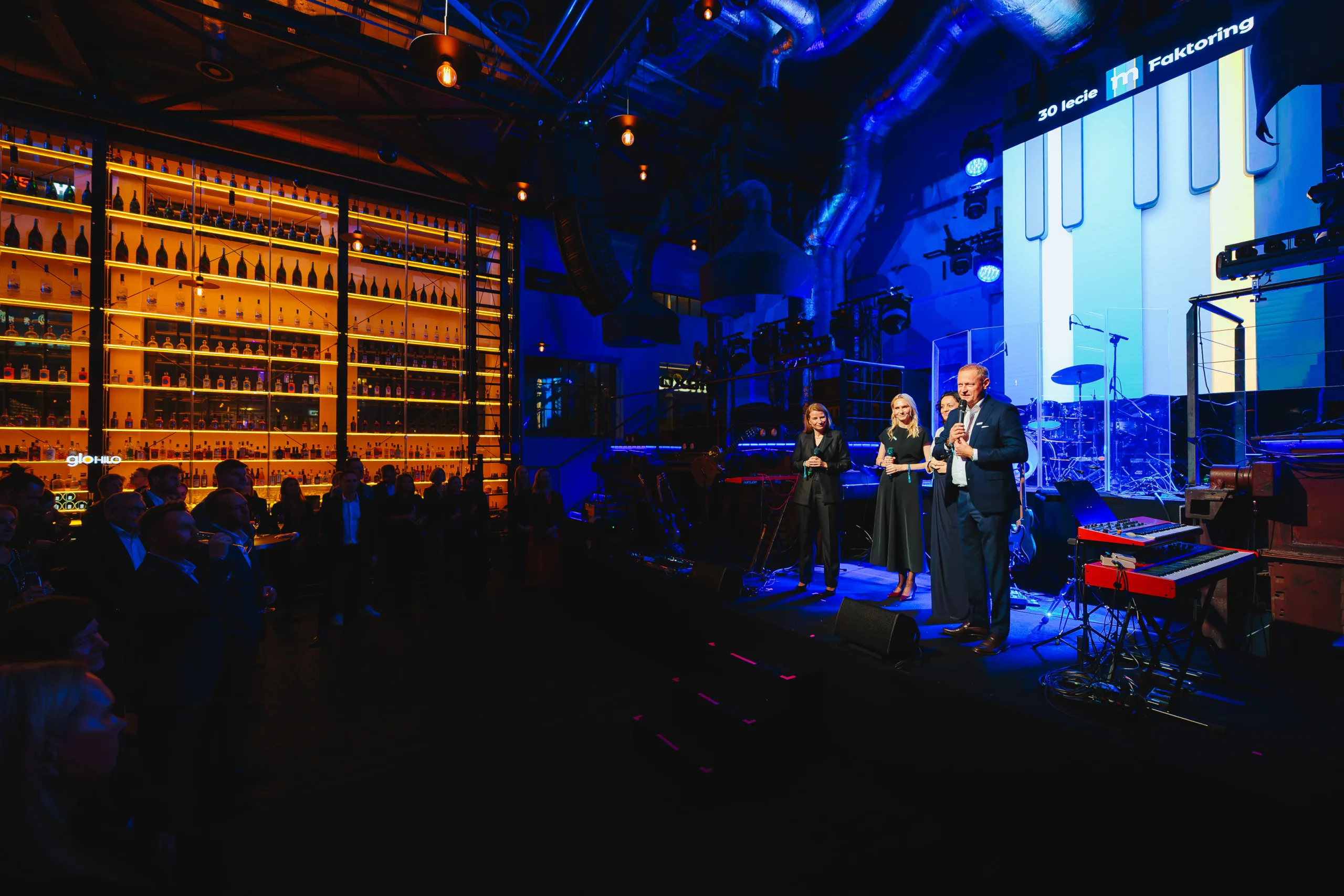
MOXO is housed in a revitalised foundry hall on the grounds of the Norblin Factory in Warsaw; it covers 900 square metres and features a permanent event stage with a mezzanine opposite it, on the other side of the space. I knew all this before I got into the car.
The type of event matters more than the interior itself
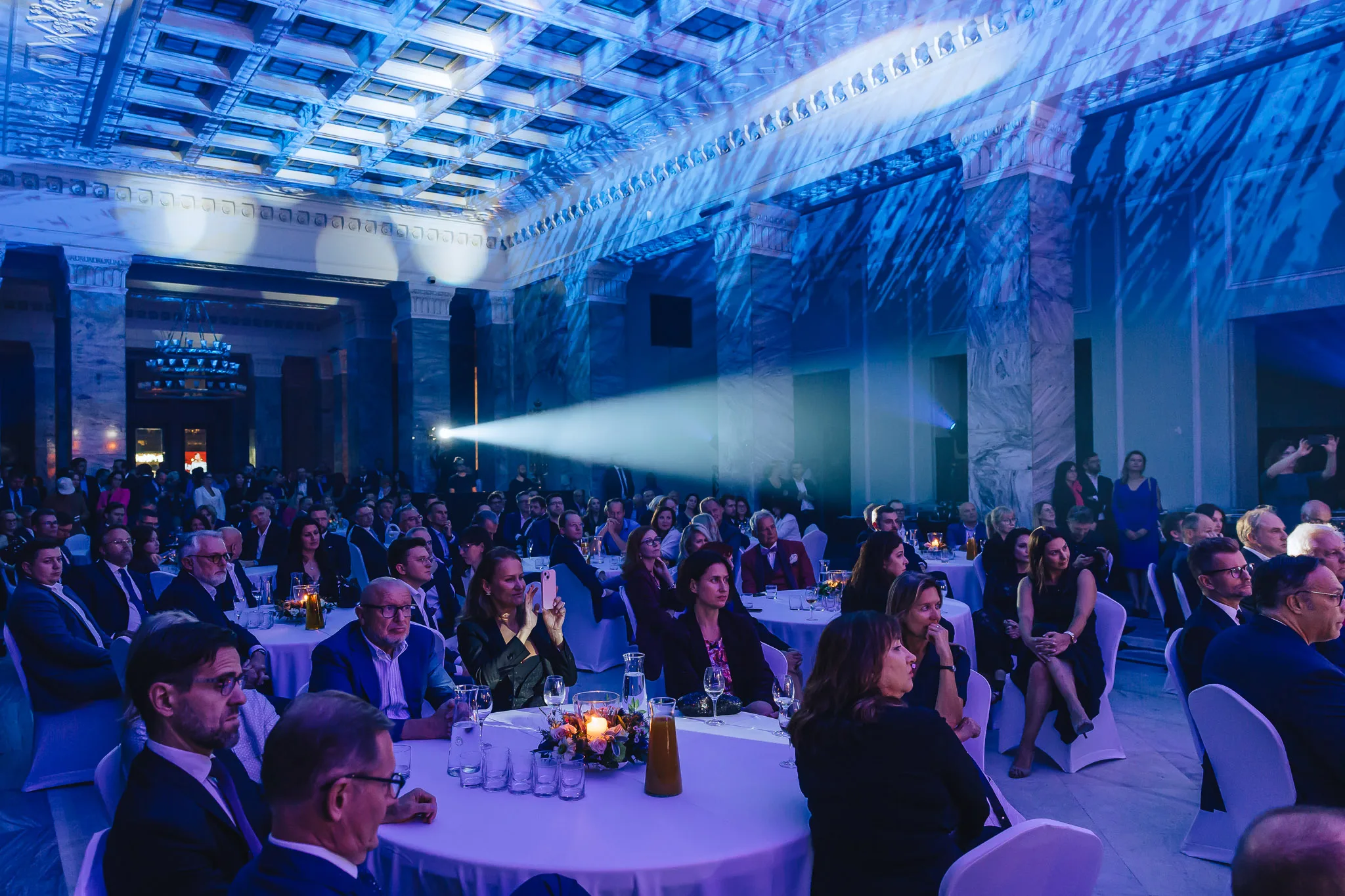
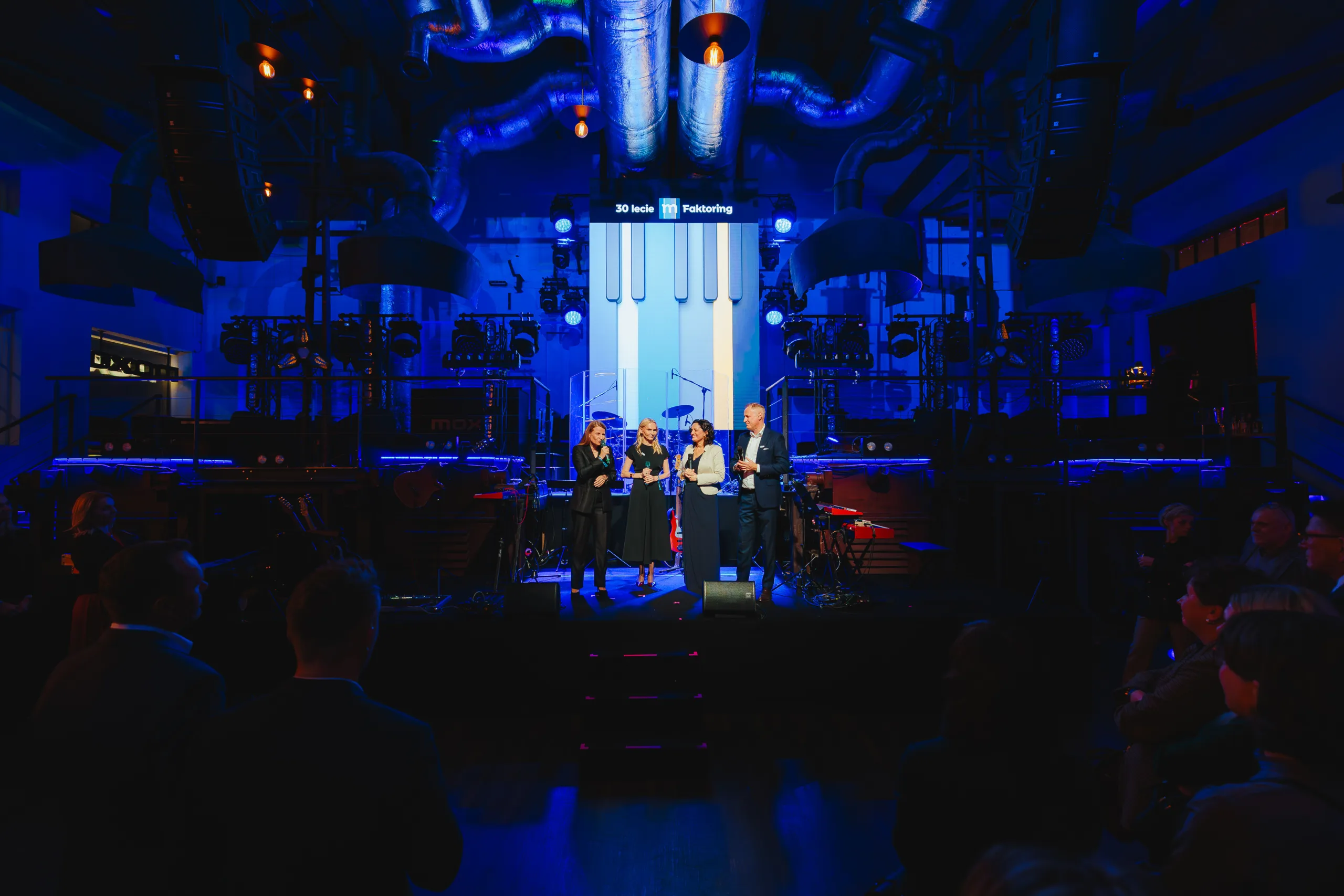
A dark space sounds like a problem, but at a gala or conference it ceases to be one, because the stage, stage lighting and screens mean the event has been produced, and there's as much lighting as is needed. The producer decides on the stage lighting, and I have to adapt to their concept.
Why I'm there an hour before the guests arrive
I arrived at MOXO at 18:00; the guests were due to arrive at 19:00, so I had an hour to spare for taking documentary photos of the finished venue and to prepare calmly before the official start.
I start by finding the contact person and a safe place for my equipment, then I go through a briefing with the person in charge of the event. I then confirm what's going to happen, whether anything has changed, and what I need to pay particular attention to.
Finally, I do a walk-through of the entire venue. From the schedule on my phone, I know the times and order of the programme items, and during the walk-through I determine where in the venue each one will take place and from where I'll be photographing it. At MOXO, I checked out the mezzanine, from which, an hour and a half later, I took photos from above during the speeches on the stage.
Before the guests arrive, I photograph the venue in its initial state, that is, fully set up but with no people present yet: the branding, the layout, the table settings, the stage and the details. Agencies commission these photos directly, as they need them for internal documentation and to archive the event. The set is often designed and produced from scratch for a single specific event, so it must be captured before the guests obscure it.
When the guests arrive
At 19:00, the same space looks different, as it is only just beginning to fill with guests. I photograph the welcome and the first conversations, and at events with registration, I also capture name badges, passes and lanyards, details that are an integral part of any event coverage.
Why don't I stay in one spot for the entire speech?
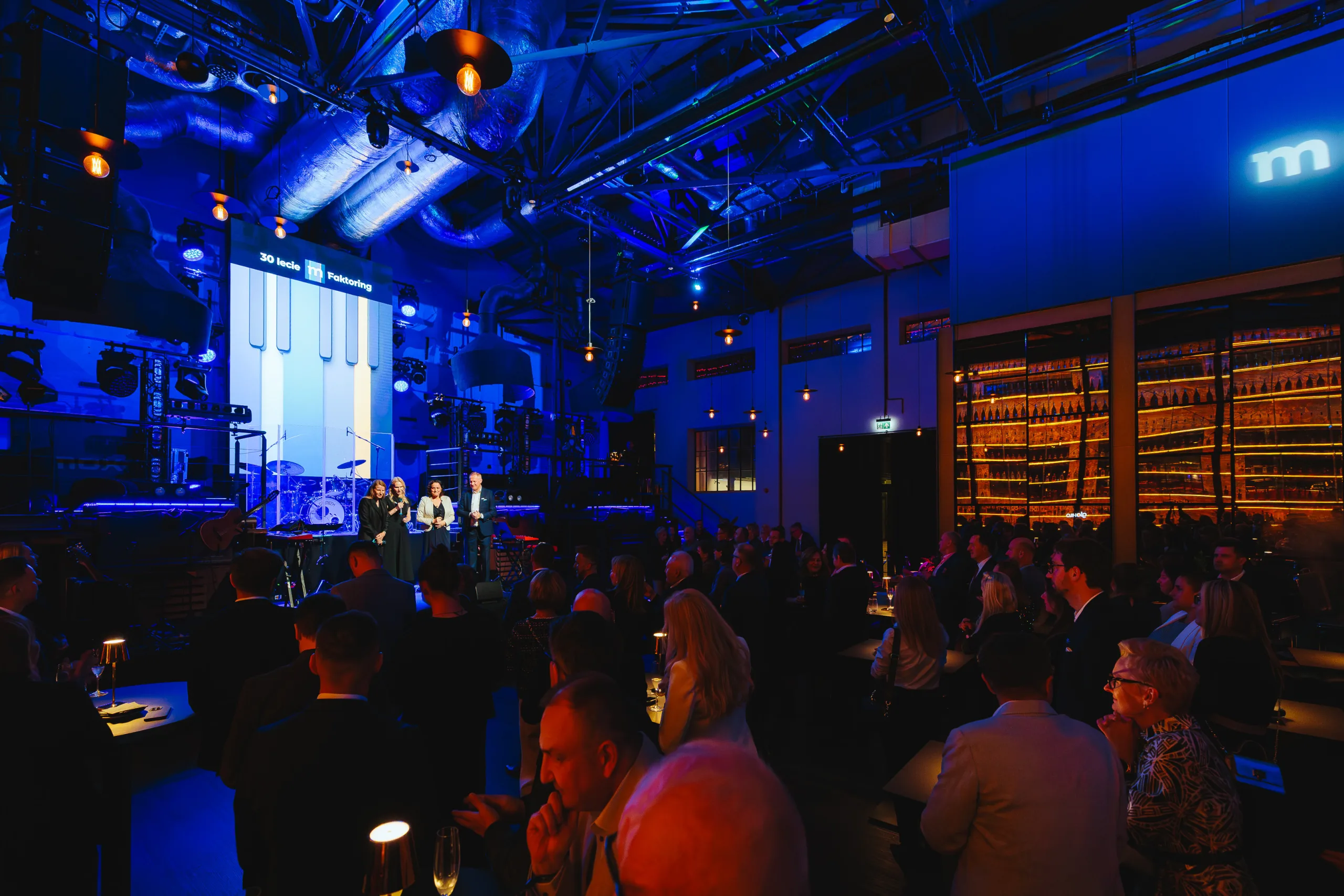
If I were to stand in one spot at the foot of the stage for the entire 10 minutes and shoot everything from a single vantage point, the photos would, in theory, be technically sound, but the client's first question would be: 'Is there any other shot showing the guests listening to the board?' By then, it's too late to shoot anything else.
Changing positions is simply a necessity here. Throughout the official part of the event, the guests remain where they are standing or sitting, so without me moving around, every shot would look the same and the photos would lack any variety.
The order I follow is the reverse. First, I secure the 'must-have shots', a set of shots that every person on the stage must receive, without exception. Only then do I look for further angles, provided there's time, and each of these adds extra value to the photos. The supplementary photos are only supplementary once the essential set is already on the memory card.
Stepping away from the stage takes careful timing
Leaving the area around the stage during the official part carries a real risk. All it takes is for me to turn round and take three steps, and the moment is lost: a handshake, lifting a trophy, an unexpected smile in response to someone's words.
No one will repeat it at my request. The people on the stage are focused on their own performance, not on having their photograph taken, so I have to get the job done right the first time.
On top of that, there's something that hardly anyone thinks about. During a speech, I'm the only one, or one of the very few, who's moving, while 200 or 300 people are standing or sitting in one place, listening. People's eyes are naturally drawn to movement, which is why I move more slowly and in a wider arc than the distance alone would suggest.
At this gala, I worked on my own. At larger events, the official part is sometimes covered by two photographers, who share the roles of tight and wide shots; I'll write separately about when a second photographer is needed at an event.
What photos must every person who takes to the stage receive?
Everyone who takes to the stage receives the same set of shots. The reason is simple: once the event is over, no one will return to the stage to stand there again.
Full-length shot
What it shows
How the person looks on the stage, together with the production
Where the client will use it
Event report, coverage on the website
Waist-up shot
What it shows
Posture and gestures, without a distracting background
Where the client will use it
LinkedIn, presentations, press photos
Close-up
What it shows
Face and emotions
Where the client will use it
Portrait for a bio, social media
Person plus screen behind them
What it shows
The topic they were discussing, rather than the speech itself
Where the client will use it
Summary of key points, sponsorship offer
Wide shot from behind the audience
What it shows
The scale of the venue and attendance
Where the client will use it
Proof of reach for the board and sponsors
| Frame | What it shows | Where the client will use it |
|---|---|---|
| Full-length shot | How the person looks on the stage, together with the production | Event report, coverage on the website |
| Waist-up shot | Posture and gestures, without a distracting background | LinkedIn, presentations, press photos |
| Close-up | Face and emotions | Portrait for a bio, social media |
| Person plus screen behind them | The topic they were discussing, rather than the speech itself | Summary of key points, sponsorship offer |
| Wide shot from behind the audience | The scale of the venue and attendance | Proof of reach for the board and sponsors |
I take each of these shots both vertically and horizontally. Vertical shots are intended for social media, while horizontal ones are used in presentations, reports, internal documentation and online galleries, where they are the default standard.
With every person, I check the same thing: I imagine that I'm standing there myself, and I think about what sort of photo I'd like to get. This changes the way I look at things more than any list of shots ever could.
Then there's the question of perspective. You simply don't take photos from very close up and from a low angle, because that angle distorts the figure and doesn't do anyone any favours; that's why, on a tall stage, I step back far enough for the proportions to return to normal.
Why didn't I use a flash?
At this event, I was specifically asked to shoot without a flash, in order to best preserve the atmosphere of the evening lighting throughout the production. The entire space was bathed in a cool, blue-violet light, while warm highlights appeared in specific spots, coming from lamps standing on cocktail tables.
This mix is challenging when it comes to color grading, as these colours can fall apart and turn into artefacts if post-production is handled ineptly.
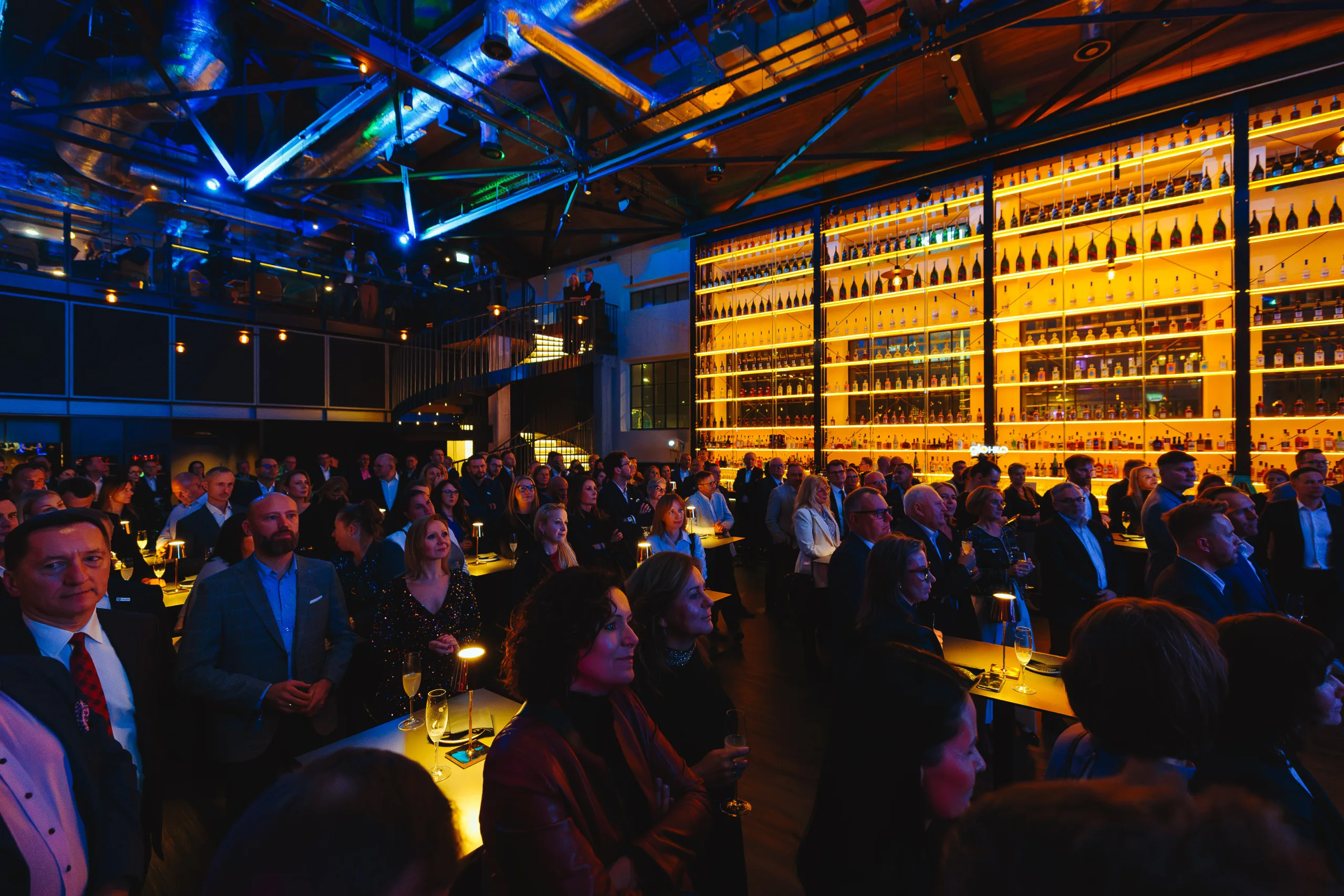
However, the absence of a flash has its advantages, as I can work from a distance and remain as inconspicuous as possible. No one is interrupted mid-sentence because something flashed from the other end of the room, so the networking section yields candid coverage rather than a set of photos where everyone is looking straight into the lens. The way I work is also important here. The guests' conversations are private, so I keep my distance, exercise tact and work as discreetly as possible so as not to disturb anyone.
A concert is a completely different task from the official part
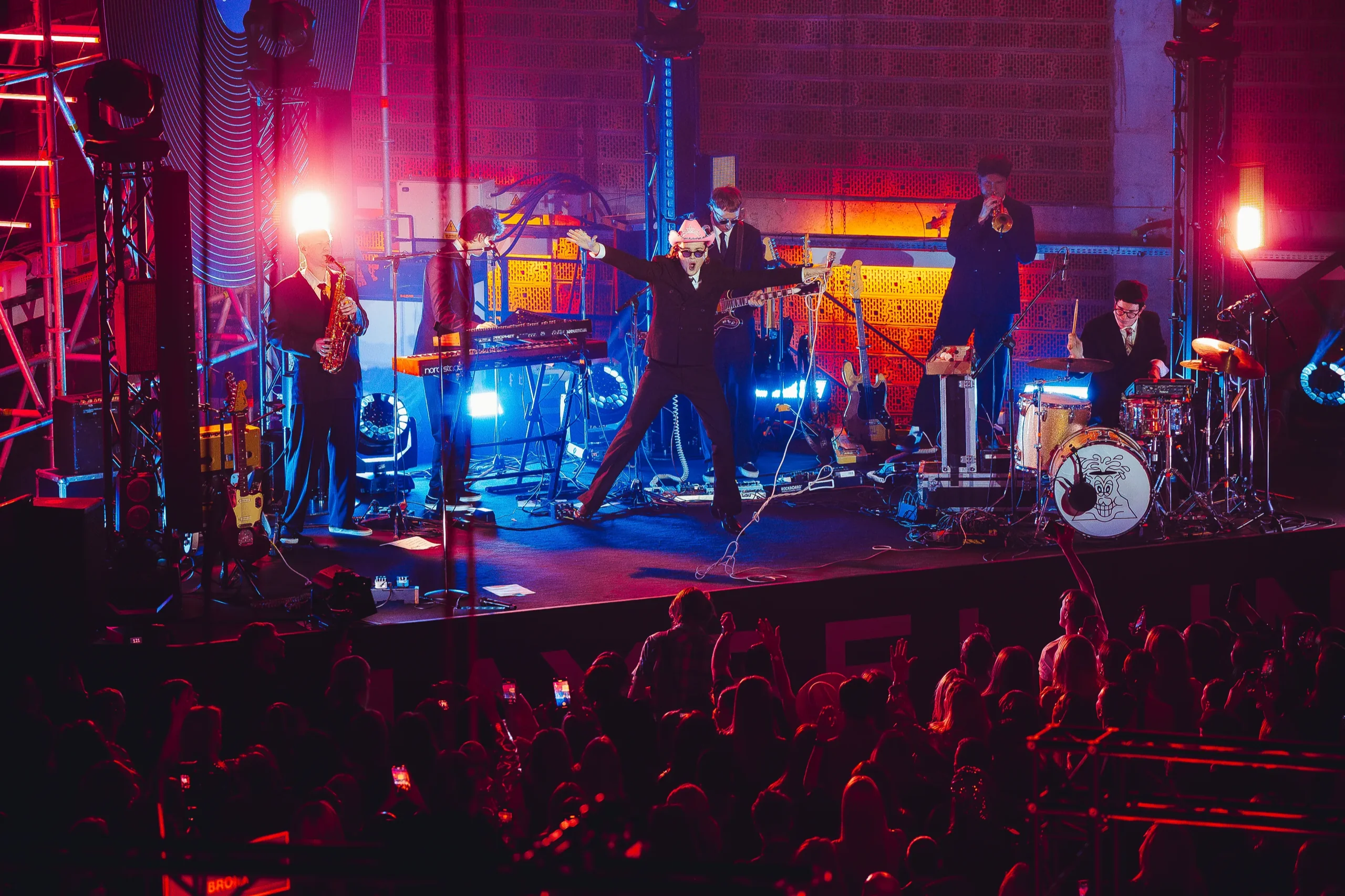
At 21:30, the concert began, an hour of live music on the stage that MOXO has permanently set up.
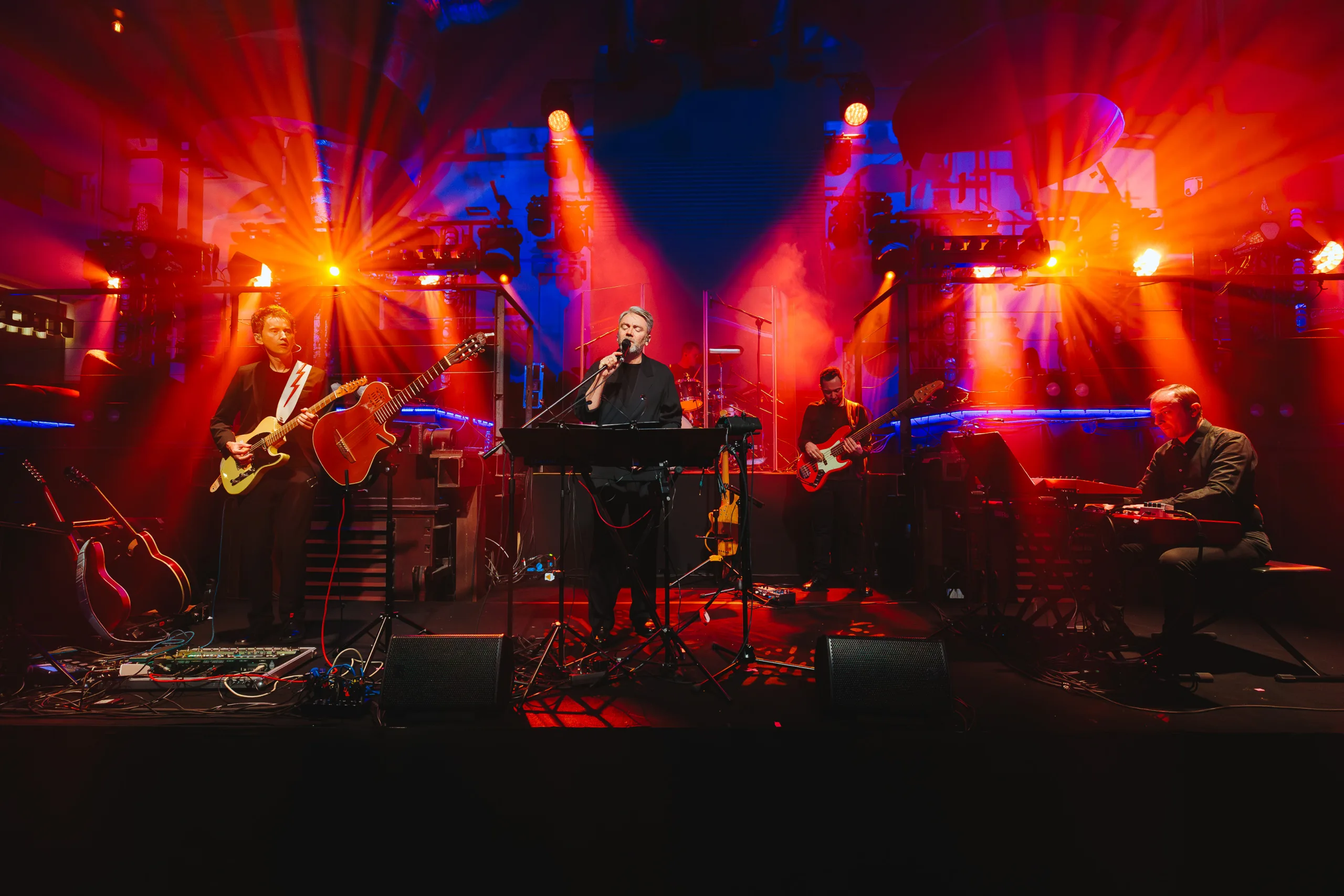
My first rule is simple: every artist gets the same number of good photos in the final selection, because the singer, guitarist and drummer are equally important elements of the show they create together. The second task is to find the right scale from less obvious angles, from above and from a distance, so that the stage, the lighting and the audience all fit within a single frame.
If I'm allowed to get closer, I take shots from places the audience can't access: a close-up of the drummer or a shot from the stage towards the audience. These photos later make the whole set stand out, as they show the evening from a perspective that none of the guests saw.
Lasers and hearing: two things to keep in mind
A full lighting production, including lasers, was in operation at the concert, and these require my special attention. When set up correctly, they never point directly at people, for safety reasons, and so they do not hit the sensor of a camera held at eye level either. A beam passing through the lens irreversibly damages the camera's sensor, resulting in the sensor having to be replaced. I therefore photograph them from a lower angle, well below the beam.
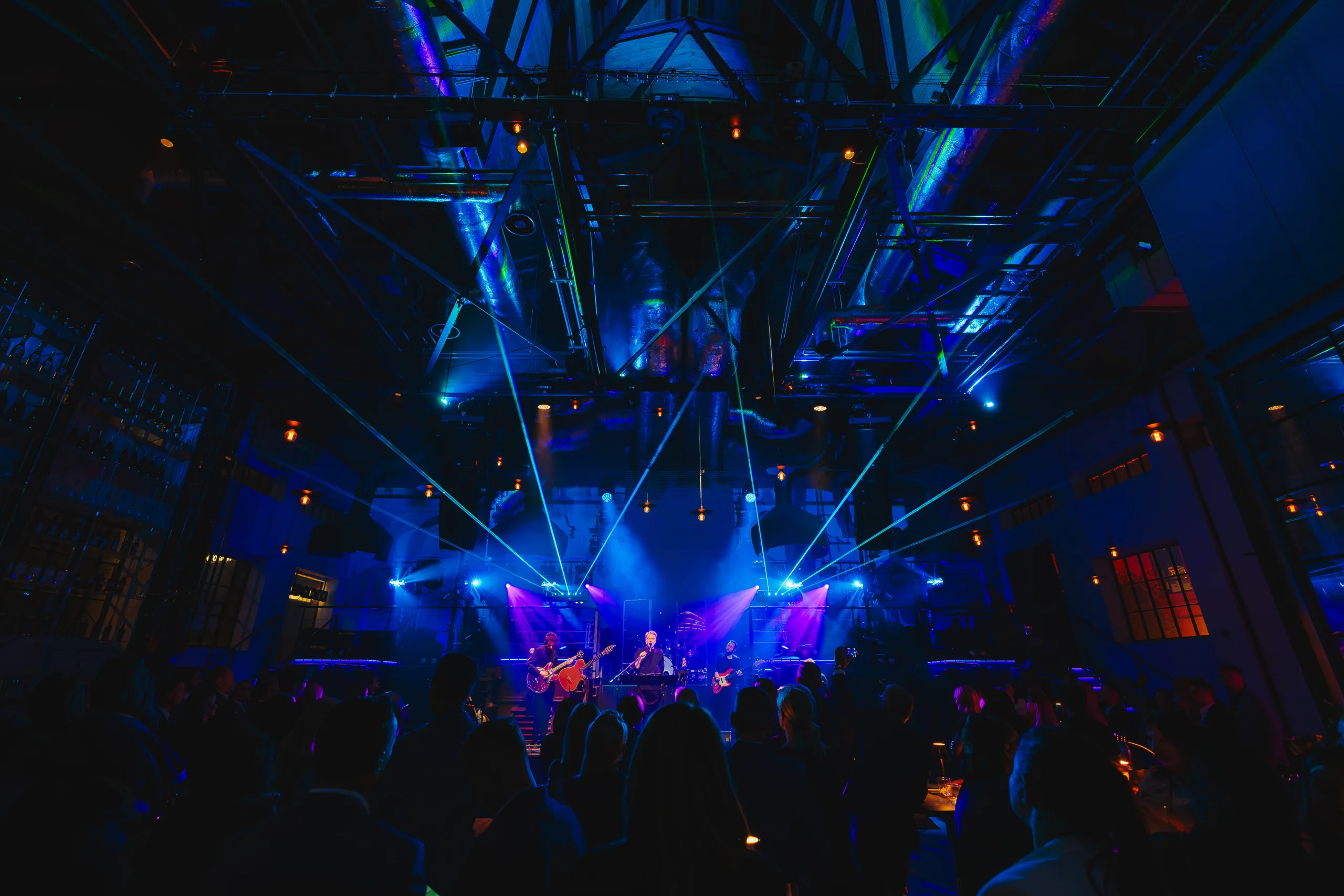
Live music is usually loud and can be piercing even with a well-balanced sound system, and hearing damage is, unfortunately, irreversible, so I always wear concert earplugs.
How many photos the client received and when
From 6 hours' work at the event for over 300 people, I delivered 220 photos after full selection and color grading.
I took far more than that, and that's no coincidence. At any given moment on the stage, I take a burst of a dozen or so shots, from which I select just one, with the subject's mouth in the right position, their eyes open and a clear gesture. These 220 photos are unique shots and perspectives, not repeats of the same frame.
Some of the photos were needed by the morning of the following day, and the package was ready by that time. Photos from an event have the shortest shelf life of anything I do, as the event remains in the news for a few days, and most of the action takes place within the first 24 hours.
If you're planning a similar event, I've described on the gala photographer Warsaw page what working with me looks like in practice: the scope of the work, how the collaboration works, and what you receive after the event. Before booking, it's also a good idea to ask the photographer a few specific questions, which I've listed in my post on how to choose a corporate gala photographer.
The questions I'm asked most often
How many photos will I get from an event with 300 guests?
From the mFaktoring 30th-anniversary gala, which involved 6 hours' work and over 300 guests, I delivered 220 photos. The number depends on the length of the event and the number of programme items, rather than the number of guests alone, as the official part with 5 people on the stage generates more essential shots than two hours of networking.
When will I receive the photos from the event?
For this assignment, some of the photos were needed by the morning of the following day, and the package was ready by that time. I agree on the deadline before the event, as it depends on when you plan to publish the photos, rather than on when I finish editing them.
Is a second photographer needed for the official part?
With 200 or 300 guests and a single block of speeches, I can manage on my own, just as I did at this gala. A second photographer provides parallel coverage: close-ups from the stage and wide shots are then captured at the same time, rather than one after the other, so there are more photos of the same moment from the official part of the event. This is most valuable when there are over 300 guests and wherever the programme involves a lot happening simultaneously.
How long does the official part last, and how many photos are taken during it?
At this gala, the brief allowed for 15 minutes, but the whole thing wrapped up in 10. I moved between six locations and took around 30 photos in a burst at each one. Every event has its own pace, and this can vary even with an identical programme, as one person on the stage might speak for longer, while another steps down after just two sentences.
Project carried out in collaboration with the ASAP24 team.